
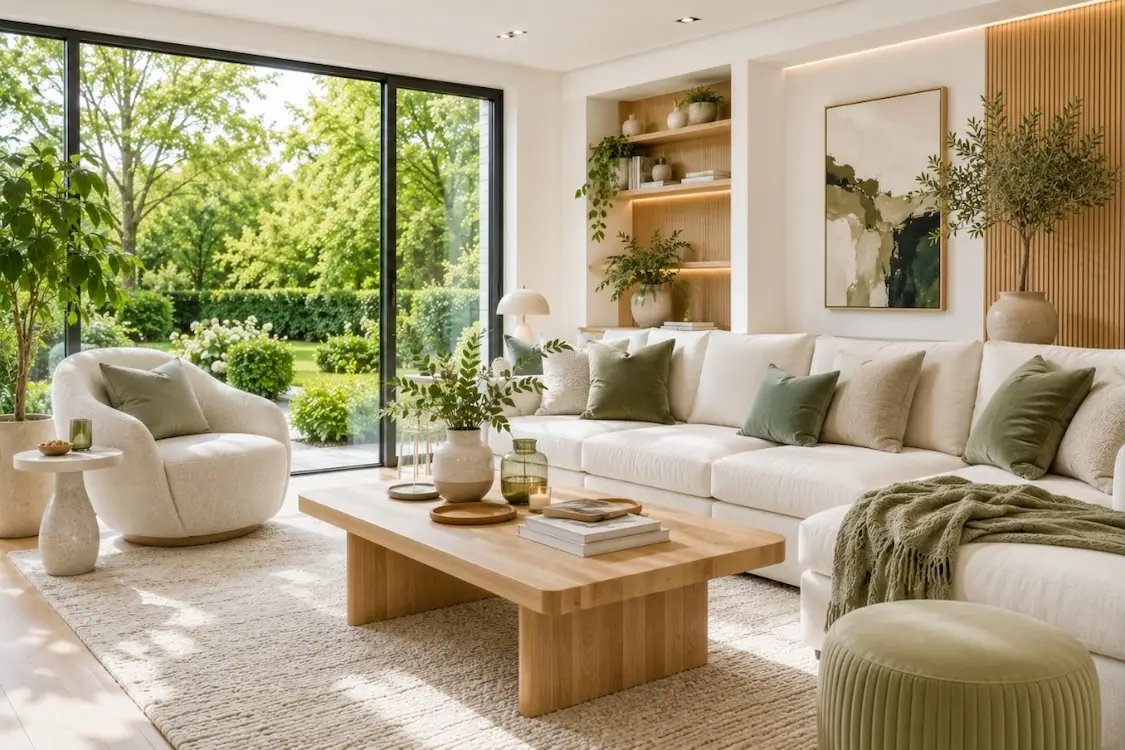
Creating a home that supports rest and relaxation is increasingly important in interior design. The latest Houzz UK research shows searches for meditation rooms rising more than fourfold, while searches for bathroom saunas are up 113%, steam rooms 94% and garden saunas 106%. While those larger additions will not be practical for every home, creating a greater sense of wellbeing can be much simpler. A comfortable place to relax, a restful bedroom, natural materials and a place to escape from screens can all help make your home feel calmer and more restorative.
Five Easy Ways To Create A Wellness Space At Home
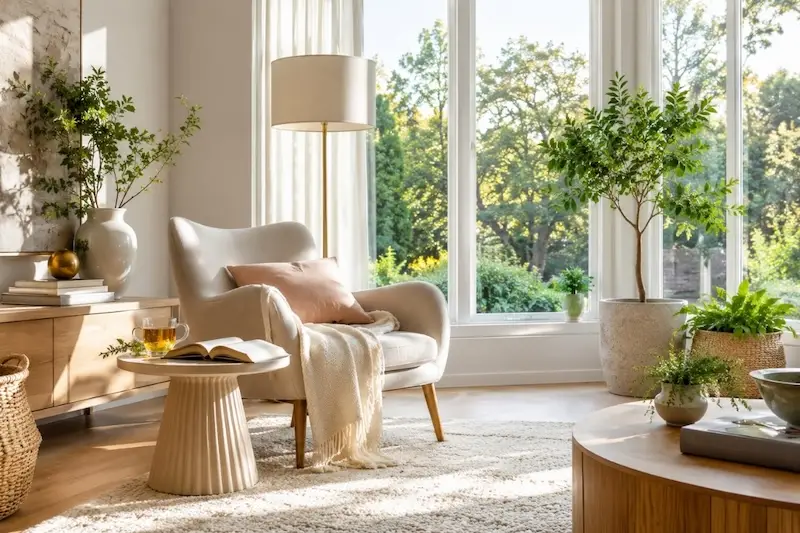
1. Create A Dedicated Relaxation Corner
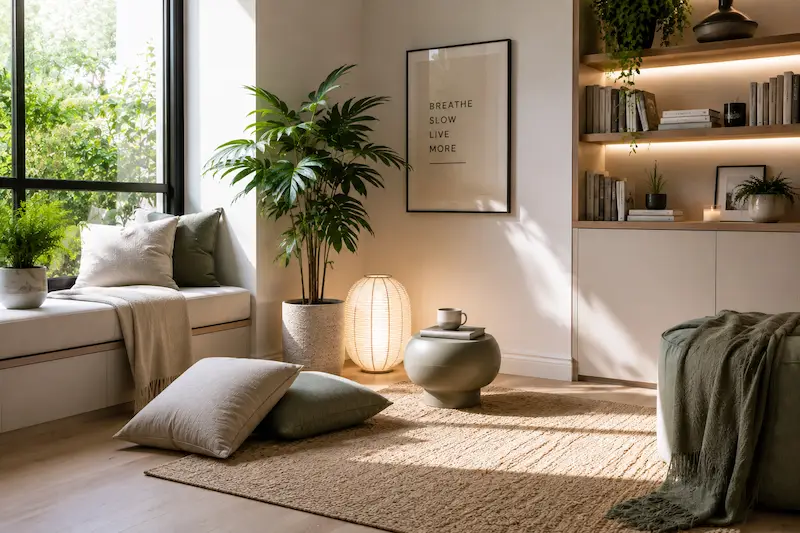
You do not need an entire room to create a dedicated space for relaxation. Look for an underused corner where you can add a comfortable armchair, good lighting and a small table for a book or a drink. A spot beside a window works particularly well if you can make the most of natural light or a pleasant view. Keep the immediate area relatively uncluttered and make it somewhere you genuinely want to spend time, whether you use it for reading, meditation, listening to music or simply sitting quietly for a while.
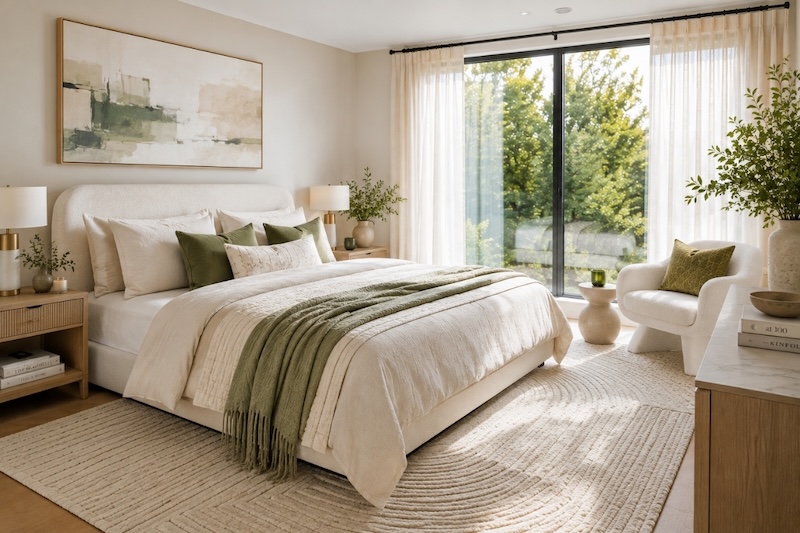
2. Make Your Bedroom A More Restful Space
Your bedroom is one of the most obvious places to focus on wellbeing. Comfortable bedding, effective curtains or blinds and softer bedside lighting can all help create a more restful atmosphere. Make the most of natural daylight during the day, then use lamps rather than relying entirely on a bright overhead light in the evening. Keep laundry, work equipment, and unnecessary clutter away from the bed where possible, and choose colours, fabrics, and furnishings you personally find calming. The aim is not to create a perfect minimalist bedroom, but somewhere that feels comfortable and encourages you to unwind at the end of the day.
3. Give Your Bathroom A Spa-Like Feel
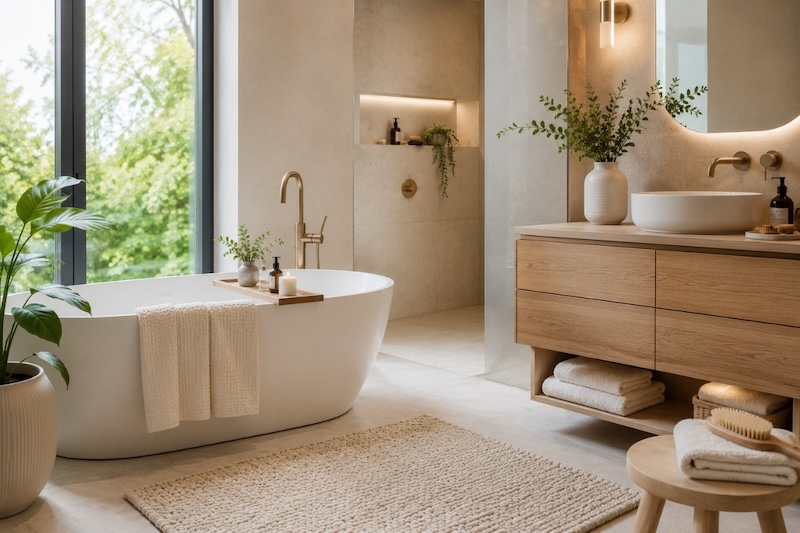
You can make your bathroom feel more indulgent without a full renovation. Clear cluttered surfaces, organise everyday toiletries, and introduce fluffy towels, an attractive bath mat, and softer lighting. A wooden bath tray, favourite toiletries, and candles can make an ordinary bath feel more luxurious, and a good shower can be just as enjoyable if you don’t have a bath. If you are renovating, practical additions such as underfloor heating, good ventilation, useful storage, and a generous shower can make the room more comfortable every day. Focus on what you will actually use, rather than adding expensive features just because they create a spa-like look.
4. Bring More Nature Into Your Home
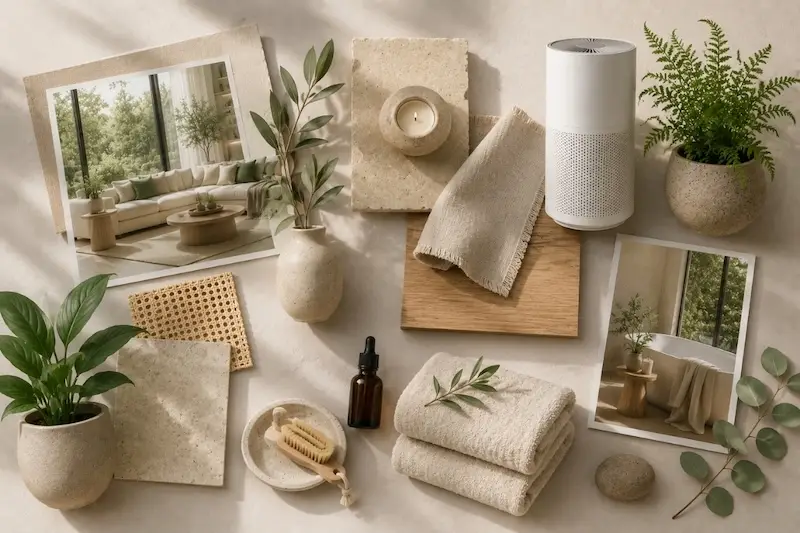
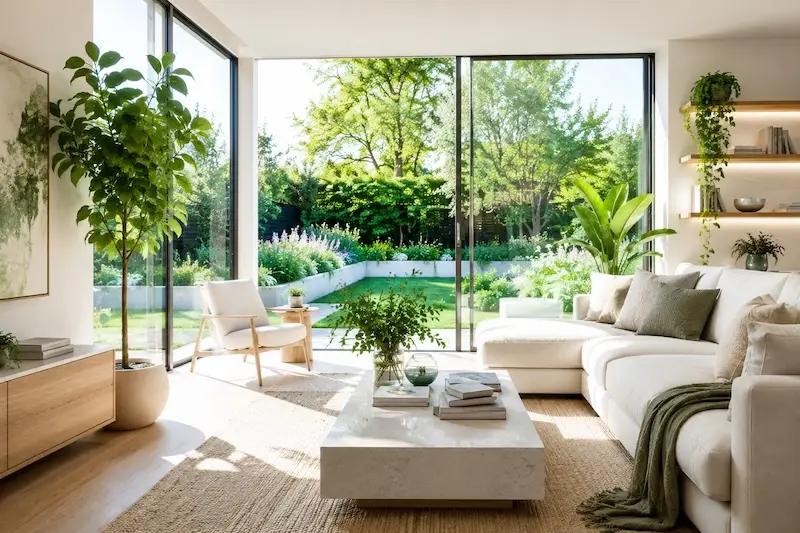
Plants and natural materials can make interiors feel softer and more relaxing. Introduce greenery where light and growing conditions allow, and consider materials such as wood, linen, wool, and stone when choosing furniture and accessories. You do not need to fill every surface with houseplants. A few healthy, well-positioned plants can have much more impact. Think about your connection with the outdoors, too. Make the most of natural daylight, open windows when practical, and position furniture where you can enjoy a garden or leafy view.
5. Create a Screen-Free Space
With phones, televisions and laptops competing for our attention throughout the day, it can be surprisingly difficult to switch off at home. Try creating one small area where screens are not the focus. It might be a chair in your bedroom, a corner of the living room, or another comfortable spot where you can read, listen to music, write or enjoy a coffee without automatically reaching for your phone. You don’t need to ban technology from the house. The idea is simply to create a space where taking a break from it feels easy and natural.
Final Notes On Creating A Wellness Space At Home
Creating a wellness space at home does not require a major renovation or a large budget. Start by considering what genuinely helps you relax, rather than trying to recreate a luxury spa. That might mean creating a comfortable place to read, improving your bedroom, making your bathroom more enjoyable to use, introducing natural materials, or simply having somewhere to put your phone down for a while. The best home wellness ideas fit naturally into everyday life and make your home more enjoyable to be in.
Frequently Asked Questions About Home Wellness Spaces
What are the biggest home wellness trends for 2026?
Interest is growing in meditation spaces, saunas and steam rooms, alongside quieter reading areas and interiors that make greater use of natural materials. However, you do not need to follow every trend. The most useful ideas suit your home and how you live.
What colours work best in a wellness space?
There is no single wellness colour palette. Soft greens, gentle blues, earthy colours and warm neutrals can all create a relaxing atmosphere, but a room does not need to be pale, beige or minimalist to feel restful. Choose colours that make you feel comfortable and work well with the room’s natural light.
What plants are good for a wellness space?
Choose plants based on your home’s conditions, not appearance alone. Consider how much natural light, warmth and humidity the room receives. A few healthy plants in the right positions will usually look better and be easier to care for than filling a room with greenery.
Can a small home have a wellness space?
Yes. A wellness space does not have to be a separate room. A window seat, comfortable bedroom chair, reading nook or quiet corner of the living room can provide somewhere to relax without requiring much additional floor space.
Does a wellness space have to look minimalist?
No. Wellness is about creating surroundings that feel comfortable and enjoyable, not about following a particular decorating style. Colour, pattern, artwork, books, and treasured possessions can all belong in a relaxing home, so you don’t need to strip a room of its personality to make it feel more peaceful.
We love these articles: Designport: Wellness Rooms and House Beautiful: Wellness Inspired Design Trends 2026. You might also like this feature: Wellness Trends In 2026 And Why They Matter.