
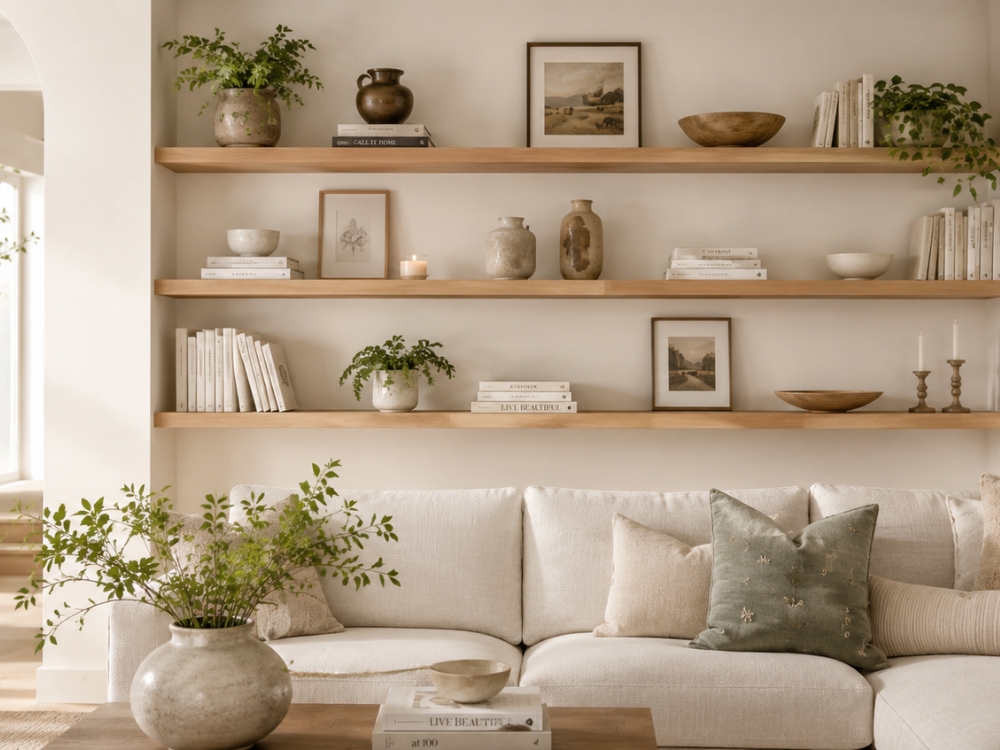
Shelves are one of the easiest ways to bring personality, warmth and thoughtful detail into your home. Whether you have built-in alcove shelves, open kitchen shelving, a freestanding bookcase or a small bathroom ledge, styling them well can help a room feel more finished without making it look overdone. The best shelf styling ideas are practical as well as decorative, using a mix of books, ceramics, framed art, glassware, plants and everyday pieces to create a home that feels collected, calm and full of character.
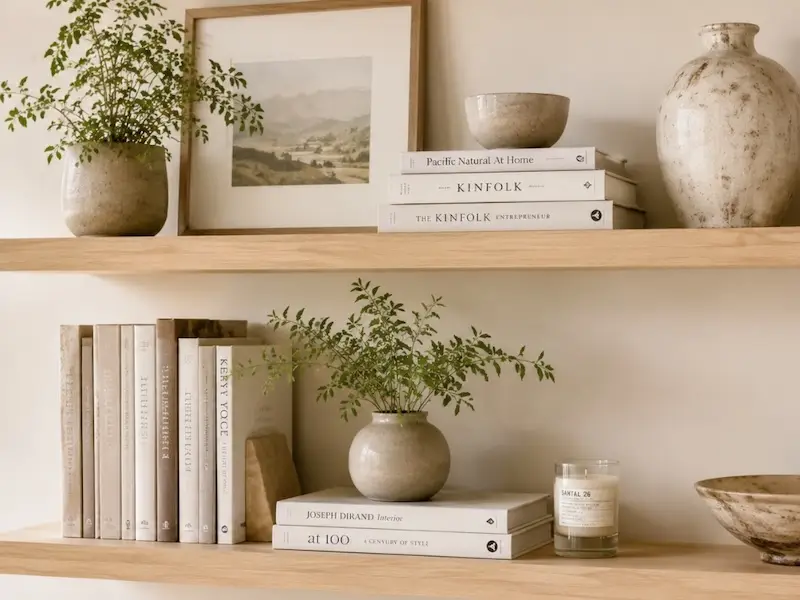
A beautifully styled shelf should never feel too perfect. The aim is to create balance, vary the height of your objects and leave enough breathing space so each piece can be appreciated. From living room shelves to kitchen shelves, bedroom shelves and home office storage, these simple ideas will help you style different areas of your home in a way that feels useful, relaxed and visually interesting.
Six Shelf Styling Ideas That Add Interest
1. Living Room Shelf Styling
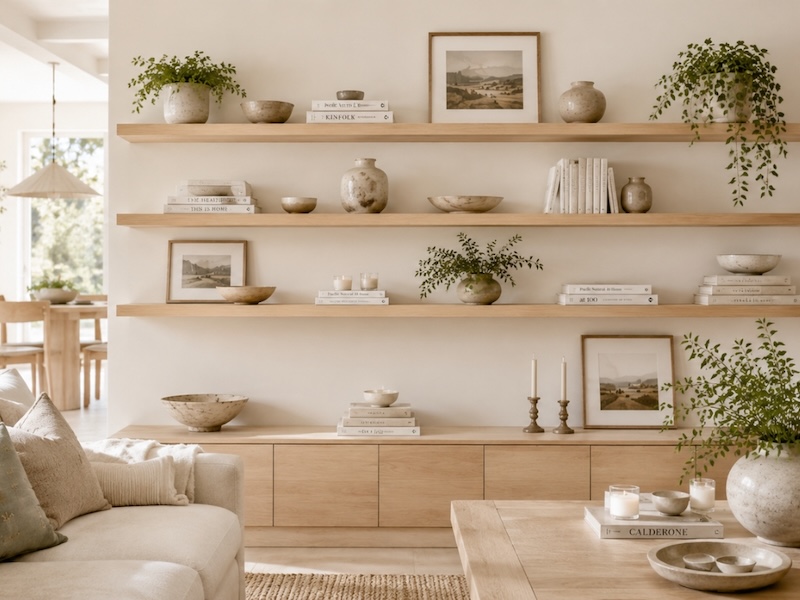
Living room shelves are often the most visible in the home, so they’re a good place to show your personality. Start with books, as they instantly add colour, texture and a sense of life. Place some upright and stack others horizontally to create different levels, then add ceramics, framed prints, small bowls, candles or sculptural objects to soften the arrangement.
Try not to fill every inch of space. A few gaps will make the shelves feel more considered and less cluttered. Plants, trailing greenery or a small vase of seasonal stems can also help break up harder shapes and bring a natural element into the room. If your living room has a neutral colour palette, shelf styling is a lovely way to introduce subtle contrast with terracotta, warm wood, smoked glass, black accents, or soft, earthy tones.
2. Dining Room Shelf Styling
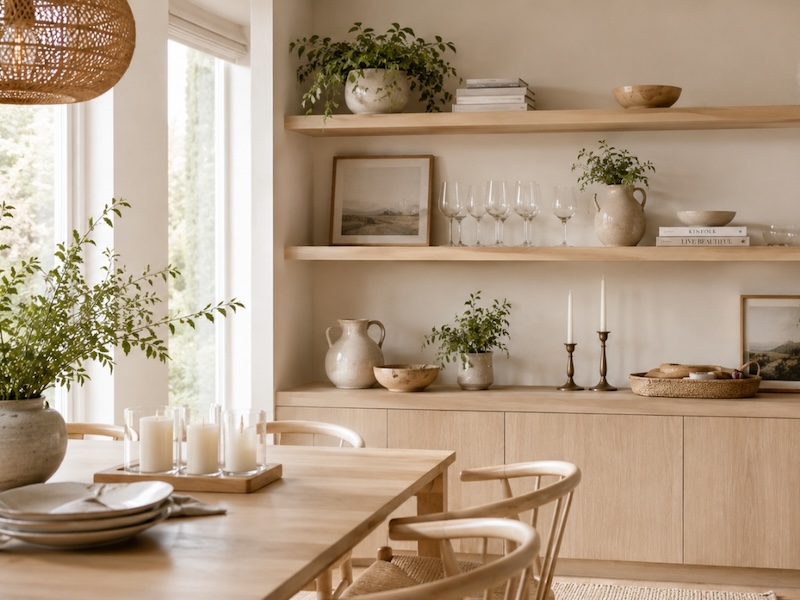
Dining room shelves work best when they feel connected to the way you use the room. Instead of styling them purely with decorative objects, mix practical pieces with items that add atmosphere. Glassware, serving bowls, ceramic jugs, candle holders, linen napkins and small framed artwork can all look beautiful when arranged thoughtfully.
The key is to make everyday dining pieces feel intentional. Group similar items together, vary the heights and avoid making the shelves look too symmetrical. A stack of plates beside a vase, a few wine glasses next to a framed print, or a large serving bowl on its own can create a relaxed yet polished look. Dining room shelves should feel generous, sociable and ready to use, rather than overly formal.
3. Kitchen Shelf Styling
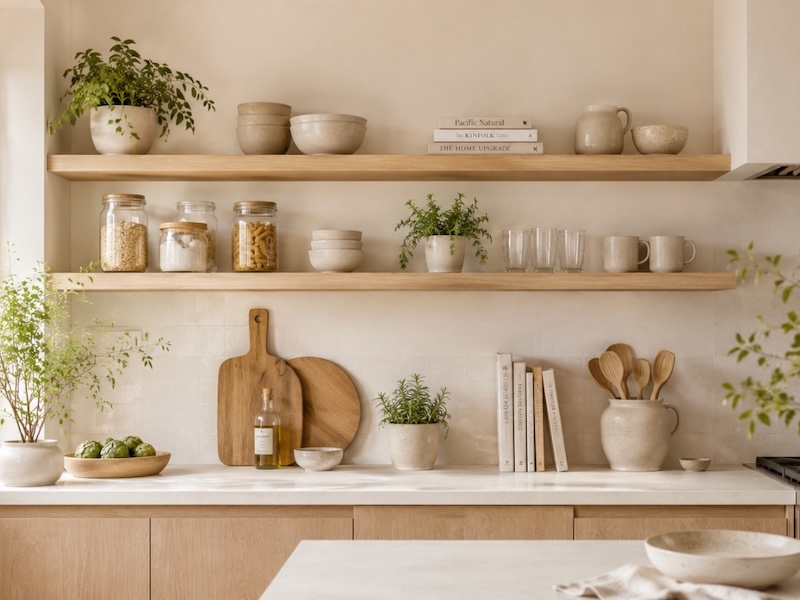
Kitchen shelves need to work hard, so the best styling approach is practical but pretty. Use them for things you genuinely reach for, such as jars, mugs, bowls, cookbooks, chopping boards, olive oil bottles, herbs and small storage containers. When useful pieces are chosen carefully, open shelving can look warm and inviting rather than busy.
To keep kitchen shelves from feeling messy, stick to a simple palette of materials. Clear glass jars, white ceramics, wooden boards, woven baskets and a few green plants usually work well together. Decanting ingredients into matching jars can also make open shelves look calmer. Add one or two decorative pieces, such as a small artwork, a vintage pot or a vase, but keep the overall feeling easy and functional.
4. Bedroom Shelf Styling
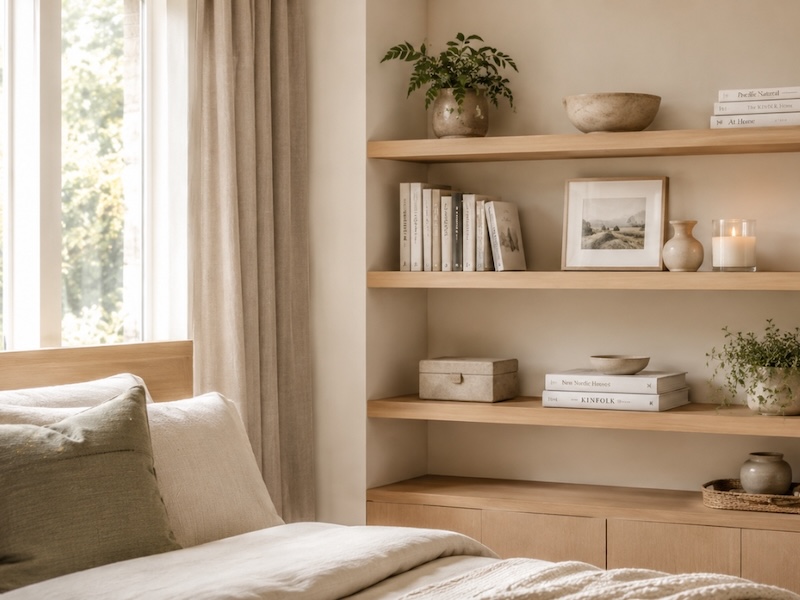
Bedroom shelves should feel restful, so keep the styling softer and more personal. Books, photographs, candles, small ceramics, keepsake boxes and calming artwork are all good choices. Avoid overcrowding the shelves or using too many strong colours, especially if the room is designed for sleep and relaxation.
A gentle mix of textures can make bedroom shelves feel warm without adding visual noise. Think linen-covered boxes, pale wood, handmade ceramics, soft paper lampshades, dried flowers or a small trailing plant. If your bedroom shelves are near the bed, consider what you want to see first thing in the morning and last thing at night. A few meaningful objects will usually feel better than too many decorative pieces.
5. Home Office Shelf Styling
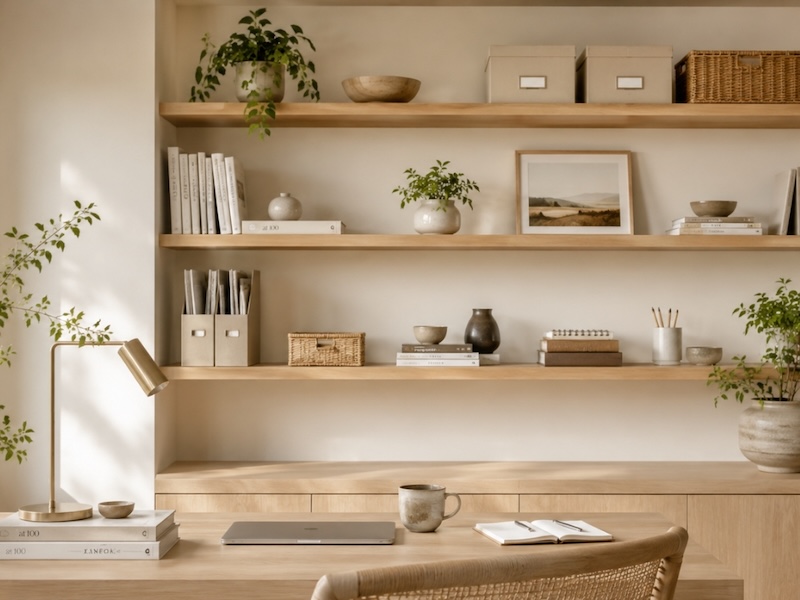
Home office shelves need to support focus while still feeling attractive. Combine practical storage with a few pieces that make the space feel inspiring. Books, document boxes, notebooks, trays, a desk lamp, framed artwork and a plant can all help create a workspace that feels organised but not sterile.
Try to hide visual clutter where possible. Matching boxes, magazine files and simple baskets are useful for paperwork, cables and smaller items that don’t need to be on display. Then use the open areas for things you enjoy looking at, such as design books, ceramics, a favourite print or a small vase. A well-styled office shelf can make a workspace feel calmer, more creative and easier to use.
6. Bathroom S Shelf Styling
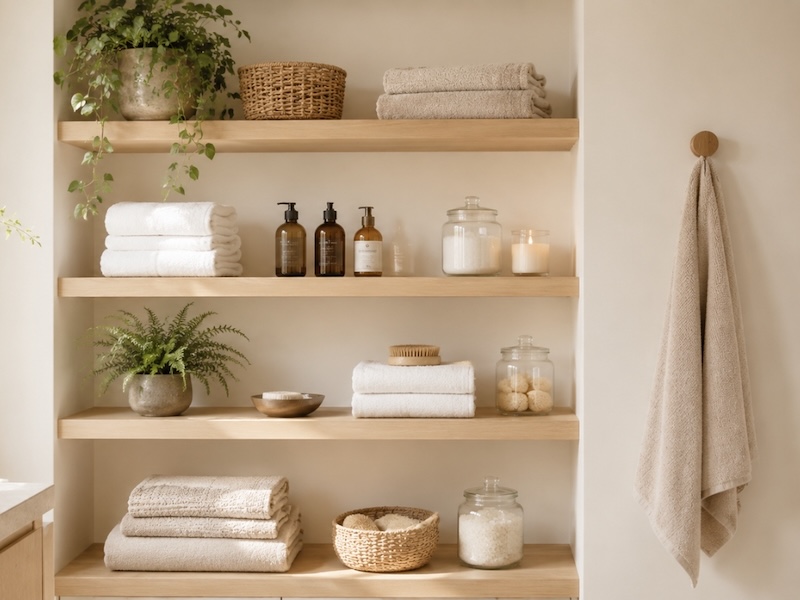
Bathroom shelves can easily become cluttered, so it’s worth being selective. Keep the everyday essentials neat and add a few spa-like details to make the room feel more inviting. Glass jars, folded towels, natural sponges, candles, small baskets, bath salts, soap dishes and moisture-loving plants can all work well.
Choose containers that suit the room rather than leaving everything in mixed packaging. Amber bottles, ceramic pots, woven baskets and clear jars can make practical items feel more stylish. In smaller bathrooms, less is usually more. A neatly folded towel, a candle, a small plant and one attractive storage jar can be enough to make a shelf feel finished without taking over the space.
Final Notes About Shelf Styling
The best shelf styling ideas are about balance rather than perfection. Mix practical pieces with decorative details, vary the height and shape of your objects and leave some empty space so the arrangement doesn’t feel crowded. Books, ceramics, artwork, plants, baskets, and glassware are all useful styling tools, but the most successful shelves are those that reflect the way you live.
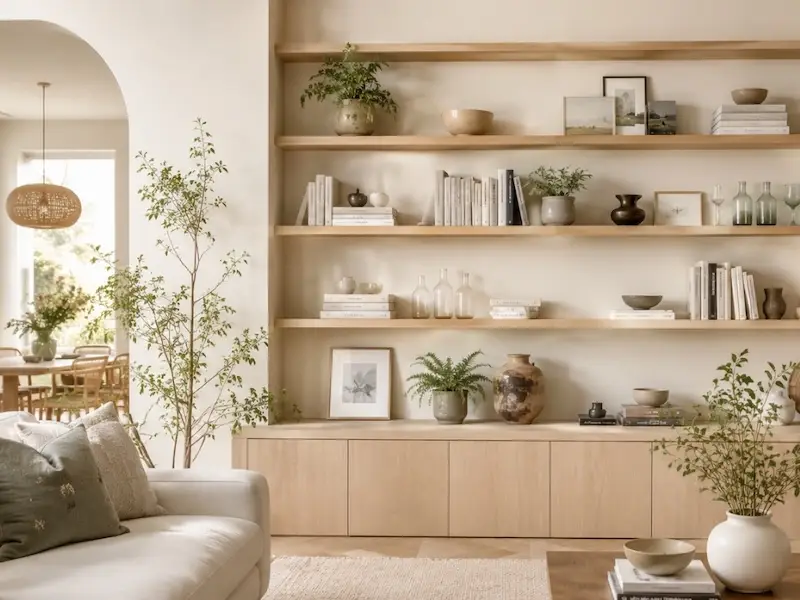
It’s also worth changing your shelves from time to time. You don’t need to buy new things every season; simply moving pieces around, swapping books, adding fresh stems, or removing anything that no longer feels right can refresh a room. Shelves should evolve with your home, helping each space feel personal, layered and interesting.
Frequently Asked Questions About Styling Shelves
How do I stop shelves from looking cluttered?
To stop shelves from looking cluttered, leave some empty space between objects and avoid filling every shelf from end to end. Group smaller items together so they read as one arrangement, then balance them with larger pieces such as books, vases, bowls or framed artwork. Sticking to a simple colour palette can also help shelves feel calmer and more considered.
What is the best way to arrange items on shelves?
The best way to arrange items on shelves is to vary the height, shape and scale of your pieces. Start with larger objects first, such as books, artwork or vases, then layer in medium and smaller items. Books can be placed upright or horizontally, while decorative objects can sit atop stacked books to add extra height and interest.
What should I put on living room shelves?
Living room shelves work well with books, framed prints, ceramics, candles, plants, bowls, boxes and personal objects. The aim is to create a mix that feels decorative but still relaxed. Include pieces that mean something to you rather than choosing objects purely to fill a space.
How do I style kitchen shelves?
Kitchen shelves are best styled with practical items that still look attractive. Jars, mugs, bowls, cookbooks, chopping boards, herbs, storage containers and ceramics can all work well. Keep the colours and materials fairly consistent so the shelves feel useful but not chaotic.
How often should I restyle shelves?
There are no strict rules about how often to restyle shelves. Some people like to make small seasonal changes, while others only move things around when a room starts to feel tired. Swapping a few books, adding flowers, changing a framed print or removing excess items can be enough to make shelves feel fresh again.
What should I avoid putting on shelves?
Avoid putting too many small items on shelves, as they can quickly make the space feel busy. It’s also best to avoid overcrowding, clashing colours and objects that don’t relate to the room. Shelves usually look better when there is a mix of useful pieces, personal items and decorative details, rather than lots of unrelated ornaments competing for attention.
We like these articles: House and Garden: How to make your shelves a decorative statement and Liberty London: How to style a shelf. You might also like this feature: Vintage revival brings character to modern homes.